The Other Side of the Barn
- Line Heggelund

- May 20
- 3 min read
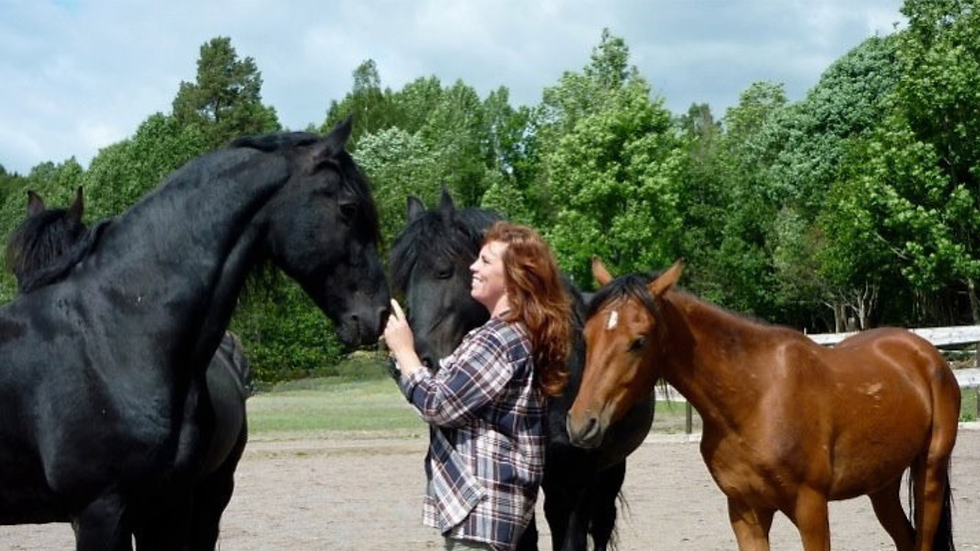
Jentene i stallen aired on Norwegian TV2 this week. Adult men with power in stable culture taking advantage of girls who walked into the barn for the love of horses. No one is held accountable. The girls walked out with PTSD, anxiety, and trust issues. Most of them walked away from the horses too. Some of them forever.
I was angry watching it. Of course I was.
But twenty years of working with young people and horses, girls and boys, the troubled, the shut-down, the ones the system had given up on, has taught me that this is one end of a long spectrum. I have spent two decades on the other end. The girls in the documentary walked in with the love of horses and walked out with problems. Mine walked in with problems and walked out without them. The barn was the same. The horses were the same. The adults were the variable.
When the adults in the barn have the children's best interest in mind, this is what happens:
The kids who arrive with PTSD start sleeping again. The girls who couldn't say no to anyone learn to set a boundary with a six-hundred-kilo animal and feel, for the first time in their lives, that their no holds weight in the world. The boys who'd been called angry, difficult, beyond reach become reachable. The anxiety quiets. The confidence isn't performed. It is built, slowly, in a relationship that cannot be faked.
This isn't woo-woo. It's logic. A horse is a prey animal. Its nervous system reads yours faster than any human can. It cannot be lied to and it does not respond to performance. It responds to what is actually happening inside you. That is why it works on trauma. The horse mirrors back what is underneath, and a person who has never been able to access what is underneath finally can. Then, in a structured setting with adults who know what they are doing, the real work begins.
And it isn't only for children. The same approach holds for adults. High-performance professionals running on adrenaline so long they no longer notice they're tired. Refugees carrying trauma that has no words yet. Women rebuilding themselves after years of being told their no didn't count. The method is specific and the principle is the same. The horse doesn't care what you do for a living, what country you came from, what was done to you, or how well you've learned to hide it. It responds to what is happening in your body right now.
That is what makes the work universal. And that is what lets it land in places talking therapy sometimes can't reach.
That work is not soft and don't let the setting fool you. It goes deeper, faster, and more accurately than a room with two chairs and a pill ever will.
The documentary told one story. It needed to be told. The men responsible have to be held accountable. The culture that protected them has to end. But it is not the only story. For every barn where adults betrayed the children who trusted them, there are barns where children, and adults, learned, in the most literal way possible, that they could trust themselves, and the right adults, again.
That is the work. That is what many of us are doing. That is what should be funded, expanded, protected, and made available to every person who needs it, not buried under the shadow of the worst of us.
Still figuring it out, sharing what works @screwthescript.com/blog


Comments